

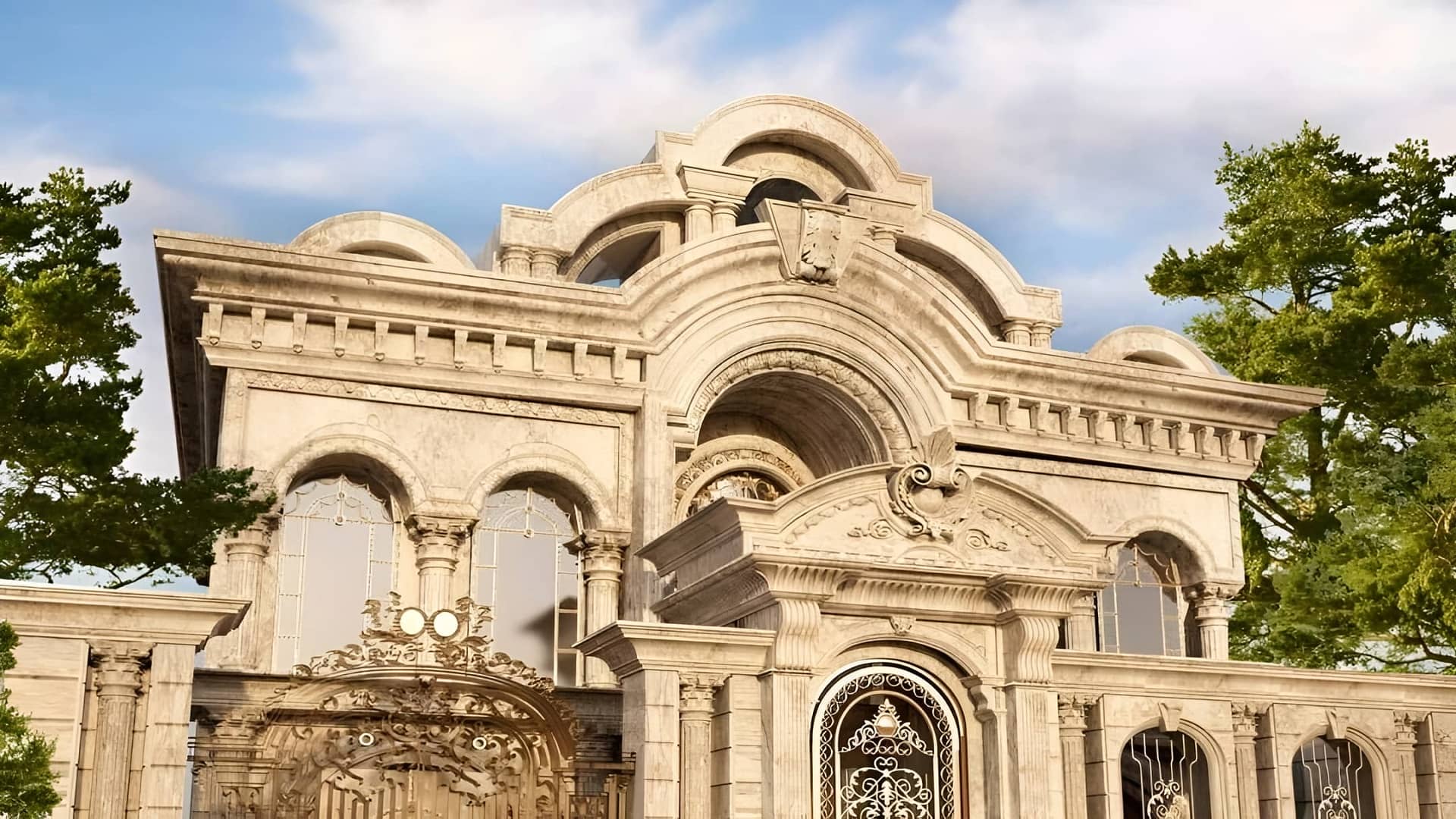
The facade is the first element that captures the viewer’s attention—it plays a decisive role in the building’s aesthetics, market value, and longevity. A well-chosen cladding stone does more than deliver visual elegance; it provides durability, protection against environmental conditions, and significantly reduces long-term maintenance costs.
In this article, we’ll explore the key characteristics of high-performance facade stones and compare various types to help you make the best choice for your project. If you’re aiming to build a stylish, resilient, and long-lasting structure, stay with us through the end.

Why Is Facade Stone Selection So Important?
The facade is a vital architectural element that defines the identity, value, and lifespan of the building. Choosing the right material does more than enhance curb appeal—it ensures resistance against environmental factors like sun, rain, pollution, and temperature fluctuations.
Natural stone is considered one of the best materials for exterior cladding due to its high strength, long lifespan, and timeless aesthetic. But which stone is the best choice? Let’s dive into the options.
Natural Stone Appeal
A thoughtfully designed facade can dramatically increase a building’s value. High-quality natural stone elevates both beauty and endurance, creating a refined look that lasts for decades.
Durability Against the Elements
The ideal cladding stone must combine elegance with performance: Resistance to UV radiation, rain, and air pollution, Strong adhesion to mortar, Optimal weight for structural compatibility, Low long-term maintenance.
The Role of Climate in Choosing the Right Stone
Climatic conditions must be considered: Some stones are prone to cracking in freezing temperatures, Others may discolor or erode in humid or rainy regions
Understanding the physical properties of each stone and matching them with the local climate helps ensure the longevity of the facade.
A Comparison of Popular Cladding Stones
Not all building stones perform the same. Some offer higher durability, while others are chosen primarily for their decorative appeal. Below is a breakdown of commonly used stones.
Travertine: The Versatile Favorite
Travertine is among the most widely used cladding stones. Its high porosity improves mortar adhesion, and it comes in a wide range of colors. Cream-colored travertine stands out in the market due to its appealing look and resistance to weather—making it a top choice for modern and traditional facades alike.
Granite: High Strength, with Installation Challenges
Granite is known for its exceptional density and resistance to impact and abrasion. However, its smooth surface and weight reduce adhesion, making it less suited for vertical facades. Instead, it’s often used for stairs, countertops, and interior cladding.
Marble: Luxurious but Sensitive
Marble captivates with its veining and polished finish, offering a luxurious appearance. However, it’s sensitive to acidic rain and sunlight, which can cause discoloration over time—making it better suited for interiors or special exterior designs with added protection.
Sandstone and Quartzite: Bold Choices for Modern Designs
These stones feature unique textures and tones, adding character to contemporary architecture. Yet, some varieties absorb high amounts of water, posing challenges in rainy climates. Proper sealing and project-specific selection are essential.
Marble Limestone (Marmarite): Elegant and Durable for Interiors
Marmarite offers glossy surfaces, rich color variations, and natural veining—ideal for upscale interiors. However, due to its water absorption and weather sensitivity, it’s not recommended for exterior facades. Common uses include flooring, wall cladding, and staircases.

Ramsheh Travertine: A Premier Choice for Architectural Facades
If you’re seeking the finest light cream travertine for your project, Ramsheh Travertine stands out as one of the top options in Iran’s natural stone market. Extracted from the rich quarries of the Ramsheh region, this premium stone is known for its dense texture, uniform coloring, high weather resistance, and beautifully aligned natural veining—making it an ideal solution for enduring, elegant facades.
Distinctive Features of Ramsheh Travertine
✔ Light, uniform cream tone offering a timeless and luxurious appearance
✔ Dense and durable structure for long-lasting performance
✔ High polishability and versatility in surface finishes—available in polished, leathered, honed, and other treatments
✔Symmetrical, consistent veining that enhances visual harmony in design
Advantages Over Other Travertine Types
Superior resistance to climate variations and environmental stress
Stronger adhesion to mortar, reducing the risk of detachment
Sophisticated visual appeal suitable for both traditional and contemporary architecture
From Quarry to Facade: How Ramsheh Travertine Is Prepared
Before reaching architects and construction professionals, travertine undergoes a multi-stage transformation to become a high-quality, durable, and visually appealing cladding material. Each phase—from extraction and cutting to finishing—plays a crucial role in determining the stone’s performance, aesthetics, and resistance to environmental factors. Additionally, selecting the appropriate surface treatment significantly influences the stone’s durability and functionality in architectural projects.
Extraction Process
Travertine stone is extracted from natural quarries, formed over centuries through the sedimentation of mineral-rich materials. This process typically involves the following stages:
Primary diamond-wire cutting for the extraction of structurally intact travertine blocks
Segregation and transport of selected blocks to cutting and processing facilities
Inspection and quality control to eliminate internal cracks or weak spots
Careful extraction preserves the stone’s natural composition, minimizing fractures and enhancing the final product’s structural integrity.
Processing and Its Impact on Quality
Following extraction, travertine blocks are transported to stone-cutting and processing factories, where they undergo cutting, polishing, resin treatment, and surface finishing. The type of processing affects not only the stone’s aesthetic appeal but also its durability and resistance to moisture, cold, and environmental pollutants. Some of the most important processing stages include:
Resin Filling: Strengthens the surface and reduces porosity
Mesh Backing: Increases mechanical durability and prevents cracking
Polishing: Enhances surface smoothness and visual depth
Comparing Surface Finishes
Each finish is chosen based on design intent and project conditions:
Polished: Glossy, sleek surface, Modern and classical buildings
Leathered: Textured and natural feel, Unique, high-impact designs
Bush-Hammered: Anti-slip and rugged, Wet or high-traffic outdoor areas
Honed: Matte, low-reflective surface, Minimalist and contemporary projects
Selecting the right finish directly enhances performance, aesthetics, and long-term durability of your building facade.

Proper Facade Stone Installation: Ensuring Durability, Beauty, and Structural Safety
Accurate installation of facade stone is essential for preserving a building’s longevity, visual appeal, and safety. Improper methods may result in water infiltration, aesthetic deterioration, or even stone detachment. In this section, we examine standard installation practices, recommended materials, and solutions to environmental challenges.
Installation Techniques: Dry Fixing vs. Mortar-Based Systems
Two primary methods are used for installing facade stones:
Dry Installation :
Utilizes metal brackets and channels
Offers greater resistance to temperature shifts and seismic activity
No cement mortar required, reducing the risk of efflorescence or staining
Mortar Installation:
A widely used traditional method involving cement-based mortar
Requires careful mixing and skilled application
Improper execution may lead to moisture absorption and salt leaching
Best Adhesives and Mortars for Travertine
Water-repellent cement mortar is a reliable option for standard applications. Epoxy and polymer adhesives offer superior strength and bonding—ideal for high-stress or tall structures where stone detachment must be prevented.
Facade Stone Pricing: Key Influencing Factors
The cost of facade stone is shaped by several technical and aesthetic considerations. Understanding these factors can help you make a smarter and more cost-effective choice for your project.
Stone Pricing: Factors that Shape the Cost
Stone Type & Quarry Source: Stones from reputable quarries often fetch higher prices due to superior quality.
Size & Thickness: Thicker, larger slabs offer better durability but are more costly.
Processing: Advanced treatments like resin filling, polishing, and mesh reinforcement increase both quality and cost
Impact of Color, Thickness, and Quality on Travertine Pricing
Color: Light cream and white travertine are more valuable due to demand in luxury designs.
Thickness: Greater thickness translates to higher mechanical strength—and price.
Finish Quality: Travertine with premium finishes (resin, mesh backing, polishing) is costlier upfront but more economical long-term due to reduced maintenance
Iran’s Travertine in the Global Market
With quarries such as Atashkooh, Hajibaba, Abbasabad, Abgarm Mahallat, Abyaneh, Takab, Ardebil, and Sadaf, Iran is one of the world’s largest travertine producers and exporters. Its unique quality, diverse color palette, competitive pricing, and advanced processing have earned it a strong position in global markets.
Why Iranian Travertine Is Globally Trusted
✅ Superior Quality & Structure – Consistent porosity and strength backed by expert processing.
✅ Exceptional Color Variety – Shades like cream, white, silver, walnut, and chocolate match diverse architectural styles.
✅ Weather Resistance – Naturally resilient to freeze-thaw cycles, moisture, and UV exposure.
✅ Cost Efficiency – Delivers comparable quality to Italian and Turkish stones at a lower price.
✅ Flexible Finishing Options – Available in polished, leathered, honed, and bush-hammered surfaces for every project need.
Top destinations for Iranian travertine exports include:
🌍 Italy & Spain: Major importers that process raw Iranian stone and re-export under local branding.
🌍 China & India: Leading buyers for construction and interior design industries.
🌍 Turkey: Imports Iranian blocks for further processing despite being a travertine producer itself.
🌍 GCC countries (UAE, Qatar, Oman): Prefer Iranian travertine for skyscrapers and luxury architectural projects.
🌍 Russia & Eastern Europe: Demand is rising thanks to regional construction growth.
International Standards for Exporting Cladding Stone
To successfully export travertine and other facade stones to global markets, compliance with international standards is essential. These benchmarks ensure quality, safety, and consistency for buyers worldwide. Key requirements include:
✅ ASTM (U.S.) and EN (European) Standards: These standards guarantee the stone’s strength, durability, and low water absorption—critical for building applications.
✅ Precision Cutting and Uniform Thickness: Export-grade stones must have accurate dimensions and consistent thickness to ensure seamless installation and minimize onsite issues.
✅ Robust and Secure Packaging: Stones must be packed using sturdy wooden pallets, specialized wrapping materials, and shock-absorbing foam to prevent breakage during transit.
✅ Quality and Technical Certifications: Providing laboratory test results and quality assurance documents builds trust with international clients and simplifies regulatory approval.
✅ Sample Deliveries for Global Buyers: Many international customers request trial samples before placing bulk orders to verify compliance with their project standards.
Pro Tip: Customs tariffs vary widely between countries. Understanding the import regulations of your target market can streamline the export process and increase profitability.

Final Overview
Ramsheh Cream Travertine is an exceptional choice that combines timeless elegance with outstanding durability—making it one of the most sought-after natural stones for building facades. With its light cream tone, uniform parallel veining, and high resistance to environmental stress, it meets both design and performance demands for modern construction. Its superior finishing potential and availability in various dimensions have also solidified its place in both domestic and global markets.
Key Benefits of Ramsheh Cream Travertine
- Elegant, consistent color delivers a refined and tranquil look.
- Strong resistance to cold, heat, and humidity.
- High adhesion to mortar—ideal for facade cladding and exterior walls.
- Excellent processability for polished, leathered, honed, and bush-hammered finishes.
- Competitive pricing—more cost-effective than many premium stones
- Long lifespan with proper installation and maintenance
- Symmetrical, parallel veining enhances architectural rhythm
Shahab Sang Sepahan: A Leader in Stone Production and Export
As one of Iran’s foremost producers and exporters of architectural stone, Shahab Sang Sepahan Holding integrates proprietary quarries, professional showrooms, and expert export units to deliver premium quality at every stage.
✅ Sadaf Quarry – A major source of high-grade cream travertine for luxury and export markets.
✅ Echo Stone Showroom – A curated exhibition offering direct selection and comparison of top-tier stone blocks.
✅ Almas Stone Export – Manages international shipments, ensuring compliance with global standards.
Key Capabilities in Quality Stone Supply and Export
Direct extraction from exclusive quarries ensures consistent quality and supply.
Modern processing equipment delivers precise cutting, advanced finishing, and safe packaging
Diverse textures and colors—stones produced in polished, leathered, bush-hammered, and honed finishes
Project-grade fulfillment—trusted by top architects and developers for large-scale domestic and international projects
Reliable global shipping—specialized packaging and transport to Europe, Asia, and the Persian Gulf region
If you’re looking for top-quality building stones at competitive prices, Shahab Sang Sepahan is a reliable and qualified choice for you.
Why Choose Direct Purchase from Shahab Sang Sepahan?
✅ Better Pricing: Eliminate intermediaries and secure the best factory rates
✅ Guaranteed Quality: Inspect and select stones based on technical specs and visual criteria
✅ Broader Variety: Access the widest selection of travertine models, dimensions, and surface treatments
✅ Custom Sizing & Finishing: Tailor the stone to meet the precise needs of your project