

Are you searching for a building stone that offers both durability and visual elegance? Travertine stands out as one of the most sought-after choices on the market, thanks to its unique texture, wide color range, and excellent resistance to weather conditions.
This natural stone not only adds a luxurious touch to any structure, but also offers exceptional longevity and strong adhesion to mortar—ensuring a lasting, reliable façade. In this comprehensive guide, we’ll explore everything from the characteristics and benefits of travertine to its processing, applications, pricing, and export potential. Whether you’re designing a stylish, weather-resistant, and cost-effective building, or simply want to make a more informed choice, this article has you covered.

What is Travertine? Why is Travertine Popular in Construction?
Travertine is a top-tier choice for building façades and flooring. Formed in nature, it blends aesthetic refinement with structural strength. Its vibrant color options, strong bond to mortar, and impressive weather resistance make it ideal for a variety of construction projects.
How Does Travertine Form?
Travertine takes shape over millions of years through geothermal activity, often near hot springs. As calcium-rich mineral waters flow over time, layers of sediments gradually accumulate and solidify into the porous stone we know today. The small cavities within its surface are remnants of dissolved gases—a natural feature that enhances thermal insulation and improves adhesion to mortar.
Why is Travertine Better Than Other Building Stones?
While stones like granite, marble, and limestone each have their strengths, travertine combines the most advantageous traits of them all:
✅ Superior resistance to weathering : unlike marble, which is vulnerable to moisture and temperature changes.
✅ Excellent bond with mortar : thanks to its porous structure, reducing the risk of detachment over time.
✅ Flexible processing options : it can be finished in polished, honed, leathered, or bush-hammered styles for interior and exterior use.
Key Advantages of Using Travertine in Construction?
Travertine brings more than beauty to the table. Its unique technical properties make it a smart choice for designers and architects:
Natural Elegance with Wide Color Variety
Available in cream, white, chocolate, gold, red, and silver shades, travertine can be processed in both veined and crosscut formats. Its natural patterns and textures allow for creative architectural expression—suitable for both classic and modern styles.
Excellent Weather and Temperature Resistance
This stone performs exceptionally well against heat, cold, humidity, and UV exposure—maintaining its appearance and integrity over the years. It’s a top recommendation for buildings located in regions with extreme seasonal variations.
Strong Adhesion and Easy Installation
Travertine’s porous texture helps it grip mortar securely, making it less prone to separation or failure over time. This translates into greater durability and fewer maintenance costs in the long run.
Natural Thermal and Sound Insulation
Thanks to its porous structure, travertine can provide limited thermal and acoustic insulation. Factors such as slab thickness, density, pore size, and installation method influence its overall performance.
Long-Term Durability
Travertine offers outstanding resistance to abrasion, impact, and harsh environmental conditions. Unlike some stones that fade or deteriorate, travertine maintains its integrity and aesthetic value for decades.

Types of Travertine and Their Applications: How to Choose the Right One
Not all travertines serve the same purpose—do you know which type best suits your façade, flooring, landscaping, or interior décor needs? In this section, we’ll break down the different varieties to help you make the ideal choice for your project.
Travertine with Vein Cut vs. Cross Cut: Visual Differences and Practical Uses
Travertine is categorized into two main types based on the direction of the cut—vein cut and cross cut—each offering unique aesthetics and suitable applications.
✅ Vein Cut Travertine: This style highlights the stone’s natural linear veins, producing a dynamic, flowing surface. It’s widely favored in classical, Roman, and luxury architectural designs.
✅ Cross Cut Travertine: This method results in a more uniform appearance without visible veining, making it the ideal choice for modern, minimalist facades.
Which is right for your project?
If you’re aiming for a grand and elegant look, go for vein cut.
If you prefer clean lines and contemporary style, cross cut is the way to go.
Travertine Colors: From Classic Neutrals to Signature Tones
White and Cream: The most popular shades, offering a refined, luxurious feel for facades, lobbies, and modern architecture.
Chocolate and Brownish: Provide warmth and depth, often used in traditional designs and known for their resistance to urban pollution.
Reddish and Goldish: Exclusive and eye-catching, ideal for statement pieces in upscale projects.
Silver and Grayish: A perfect match for modern and industrial designs, these tones are currently in high demand for contemporary structures.
Best Travertine Types for Building Facades
For classic and Roman-style facades: Choose polished vein cut travertine in cream or white.
For modern designs: Opt for cross cut travertine in white, silver, or gray.
For rainy or humid areas: Low-porosity travertine with a leathered or resin-filled finish is recommended.
For cold climates: Thicker, freeze-resistant travertine is the most suitable option.
Applications of Travertine: Interior and Exterior Design
Exterior facades: Its high durability, excellent mortar adhesion, and timeless beauty make travertine a premier choice.
Interior walls and décor: Ideal for fireplaces, staircases, and columns, adding warmth and luxury to interior spaces.
Indoor flooring: Honed and leathered finishes are perfect for upscale lobbies and modern interiors.
Landscaping and paving: Its slip resistance and toughness make travertine an excellent choice for walkways, patios, and outdoor areas.
From Quarry to Market: Travertine Processing Stages
Before reaching the market, travertine goes through several precise stages, each affecting its quality, appearance, and value.
Extraction Process
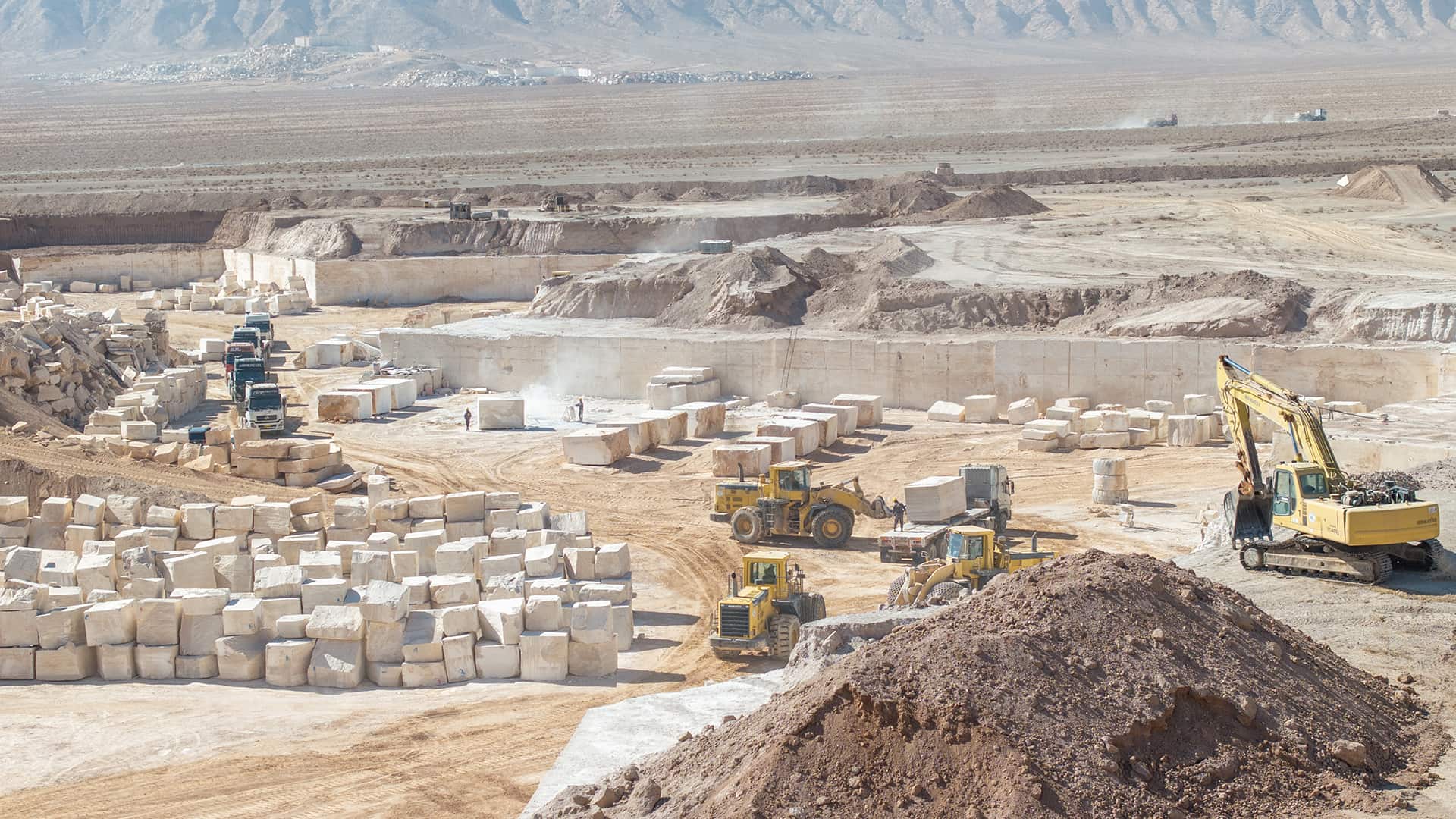
The process of producing travertine stone begins in open-pit and mountain quarries; which includes:
🔹 Selection of high-quality blocks with uniform colors and dense structure.
🔹 Cutting blocks using diamond wire and controlled blasting techniques.
🔹 Transport to factories for further cutting and finishing.
Factory Processing Steps
Initial cutting with gangsaw or block cutters to obtain standard tiles or slabs
Resin or mastic filling to reinforce the structure and fill natural holes
Polishing for a smooth, reflective surface
Final sizing and packaging for distribution
Common Finishes for Travertine
There are various methods for preparing and processing travertine stone, the most commonly utilized of which include:
Polished: Glossy and luxurious, ideal for interiors.
Honed: Smooth with a matte finish, suitable for floors and walls.
Leathered: Soft texture with natural surface preservation, great for exteriors.
Bush-hammered: Rough, anti-slip texture, preferred in traditional facades and landscaping.
Antique/Sandblasted: Textured and rustic, perfect for decorative interiors and signature designs.
The effect of processing type on the quality, durability, and price of stone
The type of finish applied to travertine plays a significant role in determining its durability, appearance, and market value. Here’s a breakdown of the most common surface treatments and their impact:
✔ Polished Finish: Delivers a smooth, glossy surface that enhances the stone’s natural color and veining. While visually striking, it is less recommended for outdoor areas where slip resistance is a priority.
✔ Leathered and Honed Finishes: Offer a matte, velvety texture with improved slip resistance, making them ideal for outdoor facades and flooring applications.
✔ Resin-Filled: This method involves filling the stone’s natural pores with chemical resins to enhance structural integrity and durability, particularly in high-traffic or moisture-prone environments.
✔ Bush-Hammered and Antique Finishes: Provide a rough, textured, non-slip surface perfect for traditional façades, exterior landscaping, and wet zones.
The more advanced and precise the finishing process, the higher the final cost. However, choosing the right type of finish depends on your project’s functional demands, design goals, and environmental conditions.

Travertine Pricing and Key Influencing Factors
🔹Quality and Grade: Travertine is classified into Super, Premium, Grade 1, and Grade 2 based on porosity, color consistency, and density. Higher quality means higher pricing.
🔹 Quarry Source and Location: Certain quarries offer stones with rare color tones or superior durability, contributing to higher costs.
🔹 Processing Method: Finishes such as polished, leathered, bush-hammered, or resin-filled have varying costs. More refined processing enhances durability—and raises the price.
🔹Dimensions and Thickness: Larger, thicker slabs are more durable and therefore more expensive than smaller tiles.
🔹 Market Conditions: Seasonal demand or global economic factors can also impact pricing.
How Color, Thickness, and Size Affect Final Cost
Color: Light tones such as white and cream are more expensive due to their popularity in modern and classic facades.
Thickness: Thicker travertine offers greater strength but also increases the price.
Size: Larger slabs provide seamless aesthetics and fetch higher value on the market.
Is Travertine Cost-Effective Compared to Other Stones?
Versus Marble: Travertine is more affordable while still offering a luxurious and natural appearance.
Versus Granite: Travertine adheres better to mortar, is easier to install, and generally has a lower price point.
Versus Engineered Stone: While synthetic stones may be cheaper, travertine’s natural charm, durability, and longer lifespan make it a better long-term investment.
Proper Installation of Travertine for Long-Lasting Facades?
Installing travertine stone on building facades is a sensitive process that directly affects the structure’s appearance, durability, and safety. If not done correctly, the stones may crack or even detach, resulting in not only financial loss but also serious safety hazards. This section reviews the best installation methods, key precautions to prevent detachment, and tips for selecting the most suitable adhesives and mortars.
Travertine Installation Methods: Dry or Wet—Which Is Better?
Travertine can be installed using two main methods: dry installation and wet installation. The choice between them depends on factors such as climate conditions, building height, and project budget.
✅ Wet Installation (Cement Mortar Method):
Stone is applied using a cement-based mix with sand, adhesive, and filler powder.
Use of metal anchors (scoops) or chemical adhesives is necessary to prevent slippage.
It’s a cost-effective method but less reliable for high-rise buildings due to weight and weather exposure.
✅ Dry Installation (Mechanical Anchoring):
Stones are attached using screws and metal framing systems.
No mortar is required, reducing risks related to expansion or contraction.
Offers better performance in seismic zones and high-rise construction but at a higher cost.
Recommendation: For tall or climate-sensitive structures, dry installation is safer and more durable. For low-rise buildings on a budget, wet installation with scooping provides a viable alternative. .
Preventing Stone Detachment: Best Practices for Safe Installation?
The detachment of facade stones is one of the serious issues in construction, which, in addition to financial damage, also poses life-threatening risks. By following these guidelines, this problem can be prevented:
✔ Use of Metal Scoops: Acts as a mechanical anchor to prevent stones from detaching.
✔ Grooving the Stone Back: Improves mortar adhesion by creating mechanical interlock.
✔ Incorporating Adhesives: Adding concrete adhesives to the mix boosts bonding strength.
✔ Standard Grouting: Prevents water infiltration and reduces the risk of freeze-related cracks.
✔ Accounting for Expansion/Contraction: Leave slight gaps in cold climates to avoid surface stress.
Note: For buildings over five stories, dry installation and metal anchoring are not optional—they are essential for compliance and safety.
Best Adhesives and Mortars for Installing Travertine
Choosing the right adhesive and mortar is essential for ensuring the longevity of travertine and preventing cracking. Depending on the project requirements, the following options are commonly used:
Standard Cement Mortar: A blend of Portland cement, sand, stone powder, and concrete adhesive to improve bonding strength.
Polymer-Based Stone Adhesive: Ideal for fast installation of travertine in both interior and exterior settings.
Epoxy Adhesive: Recommended for humid areas, high-rise facades, and heavy stone panels due to its superior strength and moisture resistance.
Nano Mortar: A next-generation solution offering high water repellency and excellent adhesion properties.
For the best results, epoxy adhesive is advisable for demanding environments, while reinforced cement mortar is a reliable choice for standard applications.

Exporting Iranian Travertine to Global Markets: A Golden Opportunity in the Construction Industry
Iran is one of the world’s leading producers and exporters of travertine stone. Renowned for its wide range of colors, high quality, and competitive pricing, Iranian travertine is widely used in luxurious international construction projects. Its growing popularity on the global stage has created a unique opportunity to expand exports and generate valuable foreign currency revenue.
Why Is Iranian Travertine So Popular in Global Markets?
Iranian travertine has earned a strong position in international markets for several compelling reasons:
✅ Unmatched Variety of Colors and Patterns – From white and cream to chocolate, red, and walnut tones, Iranian travertine offers an extensive palette for both interior and exterior architectural designs.
✅ High Quality and Excellent Durability – Thanks to its porous structure, strong adhesion to mortar, and resistance to extreme cold and heat, travertine from Iran is ideal for facades and flooring applications.
✅ Competitive Pricing – Compared to Italian or Turkish travertine, Iranian travertine delivers comparable quality at a more affordable cost, making it especially attractive to foreign buyers.
✅ Versatile Processing Capabilities – The stone is available in polished, leathered, honed, bush-hammered, and other finishes, allowing suppliers to meet diverse international market needs.
✅ Rich Quarry Access and Mass Production Capacity – Home to some of the world’s largest and most resource-rich travertine quarries, Iran can fulfill large-scale export orders with consistent quality and supply.
Key Export Destinations for Iranian Travertine
Iran exports substantial volumes of travertine stone to markets around the world each year. Some of the leading target markets include:
Europe:
🔹 Italy – One of the largest buyers of Iranian travertine, particularly for high-end luxury projects.
🔹 Germany, France, and Spain – Due to their strong use of natural stone in contemporary architecture, Iranian travertine enjoys significant popularity.
Asia:
🔹China – A major importer that also processes and re-exports Iranian travertine to other global markets.
🔹India – Frequently uses Iranian travertine in building facades and upscale construction.
🔹 UAE and Qatar – Known for luxury towers, hotels, and infrastructure projects where Iranian travertine is valued for its strength and aesthetic appeal.
Americas and Africa:
🔹 United States – A potential market for Iranian travertine, although exports are limited due to trade restrictions.
🔹 African and Arab countries – Demand is growing steadily, especially in luxury and large-scale infrastructure developments
International Standards for Exporting Travertine
To access global markets, travertine must be processed and packaged in accordance with recognized international standards. Key requirements include:
EN 1469 (European Standard): Specifies performance criteria for facade stone, including strength, thickness, and surface finish.
ASTM C1527 (U.S. Standard): Defines the physical and mechanical properties of travertine for use in construction.
ISO 9001: A globally recognized quality management standard, ensuring strict control over production and quality assurance processes.
Packaging and Transport Standards: Exported stones must be packed in certified wooden pallets with protective wrapping and moisture-resistant nylon to ensure safe international shipment.
Key Tips for Buying and Maintaining Travertine: A Practical Guide
Choosing travertine stone for your building is a smart decision—but do you know how to select the best type and extend its lifespan? While many buyers focus solely on appearance, factors such as quality, finish, thickness, and care play a major role in durability and long-term beauty. Here are expert tips to ensure a confident purchase and years of elegant performance.
How to Identify Genuine, High-Quality Travertine?
If you intend to purchase travertine stone, you must be able to distinguish high-quality samples from inferior ones. Here are some key criteria to help you make a better choice:
✔ Consistent and Natural Color: Premium travertine features uniform, natural tones without dark spots or impurity streaks. Discoloration or irregular marks may indicate lower quality.
✔ Standardized and Even Porosity: Natural travertine should have evenly distributed, standard-sized pores that enhance mortar adhesion. Excessively large or irregular holes often point to subpar material.
✔ High Strength and Density: Tap the stone—if it sounds hollow, it may be structurally weak and prone to cracking. Solid resonance suggests durability.
✔ Precision Cutting and Finishing: Well-processed stones have smooth, even surfaces free from fractures. This not only enhances visual appeal but also prevents early breakage and installation issues.
✔ Weather Resistance: In cold, humid, or highly variable climates, choose travertine rated for resistance to frost, heat, and moisture to avoid structural degradation over time.
Tips to Extend the Lifespan of Travertine Stone
Beyond its elegance, travertine must be durable. By following these recommendations, you can significantly increase its longevity:
🔹 Proper Installation with Quality Adhesives or Mortar: Improper installation can lead to loosening or cracking over time. Always use high-grade cement mortar or stone adhesive to ensure structural integrity.
🔹 Apply Protective Sealants: To improve resistance against moisture, dust, and pollution, use resin or nano-sealers. These coatings enhance both the durability and sheen of the stone.
🔹 Avoid Contact with Acidic Substances: Travertine is sensitive to acids like hydrochloric acid, vinegar, or bleach. These can corrode the surface and cause discoloration.
🔹 Timely Repairs: Any cracks or surface damage should be repaired promptly. Ignoring minor issues can lead to deeper fractures and possible breakage.
How to Keep Travertine Facades Clean and Glossy?
Proper cleaning and maintenance are essential to preserve the beauty of travertine. Neglecting this can cause the color to fade and the surface to lose its appeal.
🔹 Use Mild Cleaning Agents: The best method for cleaning travertine is warm water and a gentle soap. Avoid harsh chemical cleaners that may erode the surface.
🔹 Remove Dust Regularly: Dust and debris can gradually dull the stone’s appearance. Use a soft cloth or specialized brush to gently clean the surface.
🔹 Apply Water-Repellent Sealers: In rainy regions, nano water-repellent solutions help prevent efflorescence and staining caused by moisture.
🔹Conduct Periodic Inspections: Regularly check the building’s facade to detect cracks or damage early and take corrective action when needed.

Final Overview
With decades of expertise, state-of-the-art equipment, and a highly specialized team, Shahab Sang Sepahan Group operates across the full spectrum of natural stone production—including extraction, processing, and export. Through its dedicated affiliates, the group offers an integrated supply chain for premium travertine, marble, and granite:
✅ Sadaf Quarry – Extraction of high-grade travertine blocks for processing and export.
✅ Almas Stone Export Factory – Cutting-edge facilities for advanced stone processing.
✅ Echo Stone Showroom – A curated space for direct stone selection by manufacturers and exporters
By delivering top-quality materials in compliance with international standards, Shahab Sang Sepahan has become a leading supplier of travertine, marble, and other decorative stones in both domestic and global markets. For direct, wholesale purchases at competitive prices, we are here to support your project needs.
📞 For consultation and orders, feel free to contact us.